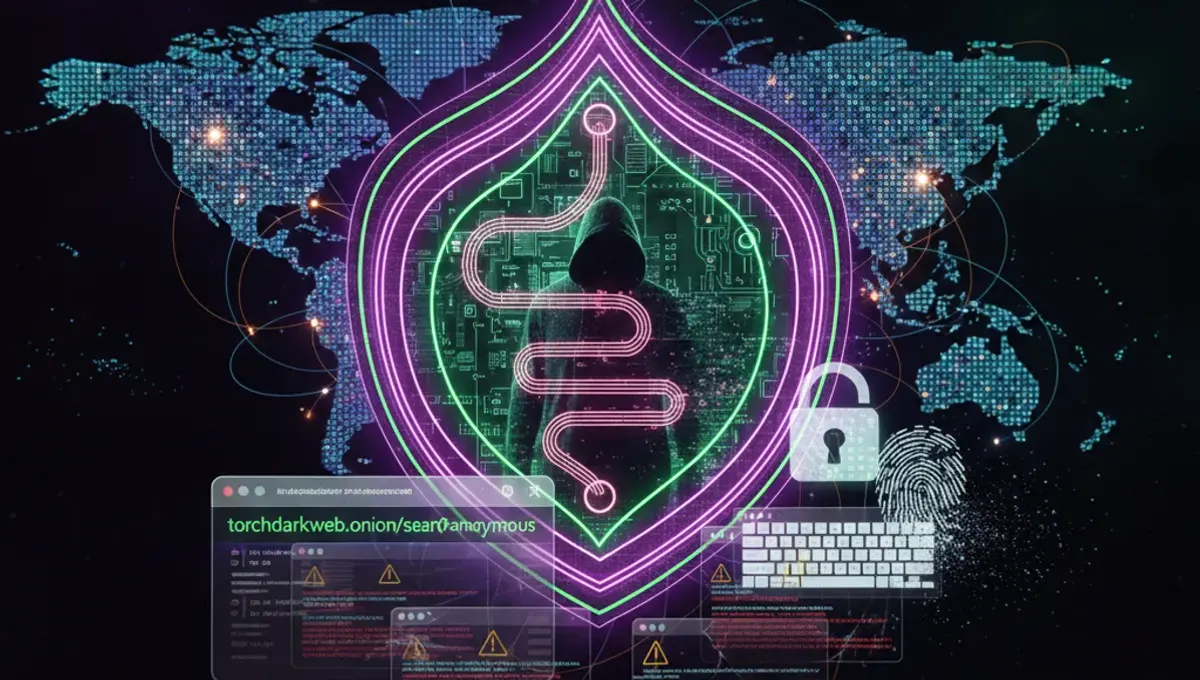
What Torch Was and Its Role in Dark Web Search
Torch operated as a search index for .onion sites, launched in the early 2010s. It crawled and indexed pages on the Tor network, allowing users to search for onion services without manually navigating directories or relying on word-of-mouth. Unlike surface web search engines, Torch indexed content that was deliberately hidden from standard search results, including forums, marketplaces, and information repositories.
The search engine became widely known because it was one of the few tools that made onion content discoverable. Users could type keywords and receive results pointing to active .onion addresses. Torch did not verify the legitimacy or safety of indexed sites; it simply catalogued what was publicly accessible on Tor. This meant results included both legitimate privacy tools and forums alongside illegal marketplaces, creating a mixed reputation that persists today.
How Torch Links Were Used and Distributed
Torch links typically appeared as .onion addresses in search results, often shared across dark web forums and Reddit communities discussing Tor. Users would copy these addresses directly into the Tor Browser address bar to access indexed sites. The search engine's primary .onion address was widely promoted, and mirrors were created to ensure availability if the main site went offline.
Distribution of Torch links happened through multiple channels. Reddit threads about dark web access frequently mentioned Torch as a starting point. Dark web link directories and wikis included Torch's address. Some users bookmarked the Torch .onion link for regular use. This widespread sharing made Torch a recognizable name, which later became a liability when phishing clones began impersonating the service to harvest login credentials or deploy malware.
The Reality of Torch's Current Status and Clones
The original Torch search engine has not been reliably accessible for years. However, the name persists in searches and forums because users continue to reference it and because clones have proliferated. These fake Torch sites mimic the original interface and claim to offer the same search functionality, but their actual purpose is credential theft, malware distribution, or data harvesting.
Phishing clones work by appearing in search results or being shared in forums as if they were the legitimate Torch service. A user unfamiliar with the history might click a clone link, enter search queries, and inadvertently expose their Tor Browser fingerprint or other identifying information. Some clones display ads or inject malicious scripts. The Tor Project documentation on onion service security emphasizes that users should verify addresses through PGP-signed announcements or official project pages rather than trusting links found in casual conversation. This principle applies directly to any Torch link encountered today.
Why Torch Matters for Understanding Onion Security
Torch's history illustrates several core principles of onion service security. First, centralized search engines on Tor are inherently vulnerable to impersonation because .onion addresses are difficult for humans to memorize or verify visually. Second, the absence of a reliable verification mechanism means users must develop their own practices for confirming authenticity. Third, the persistence of Torch's name despite its unavailability shows how reputation can be exploited long after a service has ceased operating.
For security awareness, Torch demonstrates why the Tor Project recommends using PGP-signed announcements and official project pages to verify addresses. It also shows why many users prefer the Hidden Wiki or other curated directories that attempt to maintain updated links, though these too can be compromised. Understanding Torch's role helps users recognize the broader pattern: any onion search engine or directory is only as trustworthy as its verification mechanisms and the transparency of its operators.
How to Verify Onion Addresses and Avoid Phishing
Verifying an onion address requires multiple steps rather than trusting a single source. Start by checking whether the service has an official PGP-signed announcement on a known platform. For Torch specifically, no active official announcement exists, which is a clear signal that any Torch link you encounter is either a historical reference or a clone.
When evaluating any dark web search link or onion service address, follow this approach:
- Search for the service name plus "PGP" or "announcement" on Reddit communities dedicated to Tor and onion services.
- Check the official Tor Project documentation or the Useful Resources page of this site for verified links.
- Cross-reference the address across multiple independent sources; if sources disagree, the address is likely compromised.
- Look for HTTPS certificates and onion service authentication mechanisms, though these alone do not guarantee legitimacy.
- Never click a link from a casual forum post or Reddit comment without verifying it through at least one official source.
For dark web search specifically, consider using established alternatives like DuckDuckGo's onion mirror or other search engines with transparent operators and documented verification methods.
Common Mistakes When Searching Dark Web Links
Users often assume that finding a search engine link on Reddit or a dark web forum means it is current and safe. This assumption is dangerous because forums are not moderated for accuracy, and old threads persist indefinitely. A Torch link shared three years ago may have been legitimate then but is almost certainly a clone now.
Another common mistake is conflating search engine functionality with legitimacy. A site that returns search results and looks professional may still be a phishing clone. The interface is easy to replicate; the malicious intent is hidden. Users also frequently skip the verification step because it feels time-consuming compared to simply clicking a link. This shortcut is exactly what phishing operators rely on.
A third mistake is trusting onion addresses based on partial recognition. For example, a clone might use a slightly different address that resembles the original, banking on the user's inability to remember the exact characters. This is why the Tor Project recommends bookmarking verified addresses and never relying on memory or casual searches to find them again.
Moving Forward: Safer Alternatives to Torch
Rather than searching for Torch links, consider using verified alternatives for onion service discovery. The Hidden Wiki, maintained by community contributors, attempts to curate active .onion addresses with descriptions. While it too can be compromised, it provides a starting point that is more transparent about its limitations than a generic search engine.
For specific searches, DuckDuckGo operates an onion mirror that indexes some .onion content while maintaining the privacy standards of the surface web version. The Tor Project's official resources page lists verified tools and services. Reddit communities like r/Tor and r/onions discuss current working links and share verification methods, though you should always cross-check information found there.
The core takeaway is that dark web search requires active verification rather than passive clicking. Torch's legacy serves as a reminder that even well-known services can disappear or be impersonated, and that your responsibility as a user is to develop habits around confirming addresses before use. Start with the Useful Resources page of this site, bookmark verified addresses, and treat any new link as unverified until you have confirmed it through multiple independent sources.
Frequently asked questions
Is Torch still online and working
The original Torch search engine has not been reliably accessible for several years. However, clones and mirrors claiming to be Torch continue to appear online. Any Torch link you encounter today should be treated as unverified until you confirm it through official sources. The Tor Project does not maintain a current list of active Torch mirrors, which is a strong signal that the service is no longer officially supported.
How do I know if a Torch link is real or a phishing clone
Verify the address through PGP-signed announcements or official project pages rather than trusting links from forums or casual searches. Check multiple independent sources and look for consistency. If you cannot find a current official announcement, assume the link is either outdated or a clone. The Tor Project recommends bookmarking verified addresses and never relying on memory or casual searches to find them again.
What should I use instead of Torch to search the dark web
Consider using DuckDuckGo's onion mirror, the Hidden Wiki for curated directories, or Reddit communities like r/Tor for current information. Always verify any address through multiple sources before using it. The Useful Resources page of this site lists verified tools and services. Remember that dark web search requires active verification rather than passive clicking.
Why do people still talk about Torch if it is not online
Torch was one of the oldest and most well-known onion search engines, so its name persists in historical discussions and old forum threads. This reputation makes it an attractive target for phishing operators who create clones to exploit users' familiarity with the name. Understanding Torch's history helps you recognize why verification is essential for any onion service you encounter.
Can I get malware from clicking a fake Torch link
Yes. Phishing clones may deploy malware, harvest your Tor Browser fingerprint, or steal credentials. Some clones display ads or inject malicious scripts. Clicking an unverified link exposes you to these risks. Always verify addresses through official sources and use the Tor Browser's security settings to reduce your attack surface before visiting any new onion site.